 Technique
How to Coordinate Rhythm and Timing with Your Piano Partner
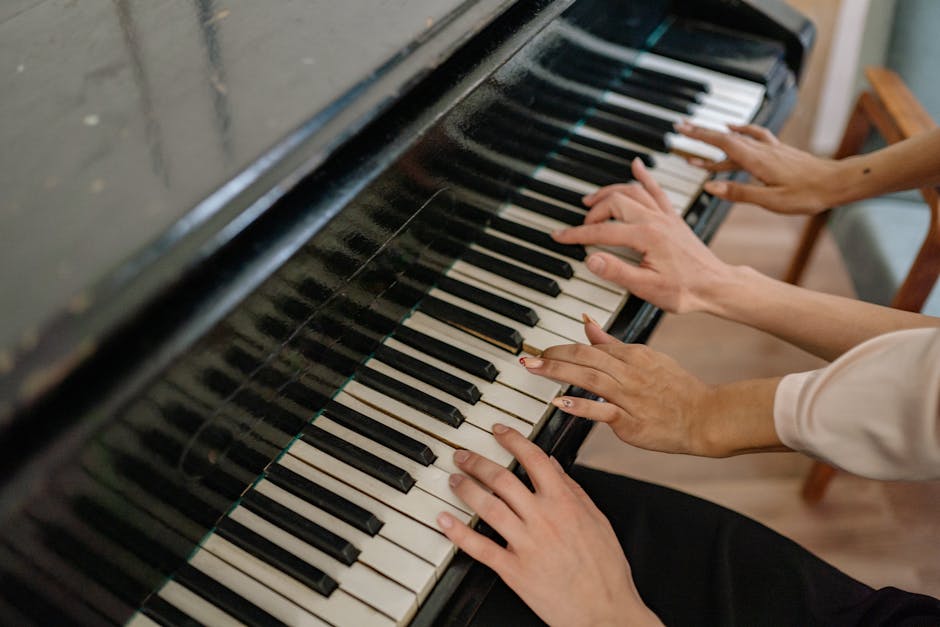
The greatest challenge in four-hand piano isn't technical difficulty—it's coordination. Playing two separate parts on the same instrument requires a special kind of partnership and communication that develops through awareness and practice.
Understanding the partnership Four-hand piano is genuinely collaborative. Unlike orchestral music where a conductor keeps everyone together, piano duets rely on mutual listening and adjustment. Both players must remain aware of what the other is doing whilst simultaneously playing their own part. This divided attention takes practice but becomes second nature.
Starting together Before playing through a piece, always establish the tempo together. Many pianists use a simple count-in: "One, two, ready, play." Some pairs tap the beat on the piano case or their legs before starting. Find what feels natural for you both. Consistency in your starting ritual helps prevent false starts and builds confidence.
Listening actively The secondo (lower part) player should listen primarily to the primo's right hand, which typically carries the melody. The primo player should listen to the secondo's bass line and overall harmonic foundation. This mutual listening creates a natural give-and-take that keeps everything aligned.
Physical communication Experienced four-hand players develop subtle physical cues. A slight shoulder movement, breathing together, or gentle elbow contact can communicate intention without interrupting the music. These non-verbal signals become invaluable during challenging passages or tempo changes.
Managing tempo flexibility Classical four-hand pieces often have natural ritardandos and accelerandos. These require agreement between players. Practise these passages separately, discussing your interpretation beforehand. When you play through, both players should apply these tempo changes together, creating a unified musical statement.
Handling mistakes gracefully Mistakes will happen—this is completely normal. The key is continuing forward without stopping. If one player makes an error, the other should maintain the tempo and let the piece flow. Stopping mid-performance disrupts the music far more than a single wrong note. Save detailed corrections for practice sessions.
Practice strategies Spend time playing your parts separately before combining them. Once you're comfortable individually, play through slowly together, focusing on staying aligned rather than achieving correct tempo. Gradually increase speed only when you're consistently together. Record yourselves to identify timing issues you might not hear during performance.
Developing trust Good four-hand piano requires genuine musical trust between partners. This builds through consistent, respectful practice and genuine communication about musical interpretation. When both players feel heard and supported, coordination becomes almost effortless.
Rhythm and timing mastery transforms four-hand piano from a technical exercise into genuine musical partnership. The rewards are profound.